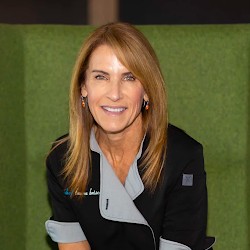
Laura Briscoe 6:28
Yeah, so I refer to all that is a happy accident. You know, I the the story really started in 2001 When I transitioned out of technology and working in tech for almost 15 years and doing sales into the culinary world, because of the.com. fiasco and what happened 2001 I found myself without a job and had an epiphany and went to culinary school. And the intention going to culinary school was actually to own a restaurant and be the the FOP you know, the front of house side of it, the manager of that the owner of it and partner with someone I’d meet in school to be the chef. And within a week, I knew two things. One, I since I’ve always loved cooking, but didn’t know what my my capabilities truly could be. I never considered myself to become a chef. But I did. So I realized I didn’t want to be in a restaurant. I didn’t want that 24/7 type of demand. And I wanted to be in charge of all of it, the business management and the chef side of it. So that was literally within a week. And then within six months, I did my first event it was a wedding for 240 people Hawaiian themed all the way down to the suckling pig that we did in a pizza oven down the street from me at a pizza restaurant. So yeah, a whole lot of opportunities for the health department there. But anyway, but it was so joyful, exhausting, but joyful. And that pretty much launched celebrated cuisine, which was my first business which I did elevated events out very elegant, plated dinner parties passed hors d’oeuvre receptions, we did some really cool stuff over the years, we did a lot of work for the ASU law school in conjunction with Sandra Day O’Connor, who was still sitting on the bench. So I’ve had an opportunity to meet her we’ve done things with athletes, we just you know, just really awesome taught cooking classes from to 2004 2003 actually 2003 on and the one thing I can say about my Culinary Life is the people that it has brought into my life are so amazing at country contribute contributed so much. So much of everything. And so many people from people who are my clients for an event or a cooking class student have become very dear friends. So when they say the food brings people together, whoever they are, they’re not lying. I mean, it’s a true statement. Early on, though, in oh three, I was playing with a recipe for granola just so I could find something that was similar to what I ate when I was in college in droves, especially during finals, but without all the sugar and dairy and all the other stuff that goes with it because I knew what my body could tolerate. And so I kept playing with this one recipe and changing the oils and modifying the sugars and changing you know adding a little bit of salt I mean all kinds of things and vanilla almond crunch was unofficially born was actually called originally just vanilla cinnamon, I think or something weird like that. And just as you know as a baker when you make something you have more than you want and so you give it away, you know yeah baking cookies at home, you give away you know, whatever. I was giving granola away like it was like it was rain. I mean just, you know my daughter’s soccer games instead of grapes or to friends. And then people started asking for it or offering to give me services for it like my personal trainers. Like I’ll train you just give me a bag of that granola. You don’t have to pay me. I think it will. That’s a good deal.
So my best friend Kathleen had said, you know, you really should think about selling this. And so I did. I was not so busy being Chef Laura at that point, I mean, who you know it. This was early on. And so I decided if I’m going to sell this product, I want to sell it in specialty. As a chef, I thought that’s where I belonged. And so I targeted AJ’s Fine Foods, which is Arizona’s premier retailer of specialty goods. And I did everything I was supposed to do to get on the shelf back in those days, and went to all the stores got buy in, like I went to every store. And I talked to the grocery manager there. And I gave them samples and asked if they would support having my product on their shelf. If I got corporate to take a look at it, things like that. And all of them said yes, but I couldn’t get anything out of corporate, not a peep. They wouldn’t respond to any of my email, not emails, but my my my boxes that I was sending in nothing. And then by happenstance, I met the owner of the entire chain at a grocery store that they were going to convert into an AJs. And so I talked to him, I didn’t think twice about it. I was actually in my chef gear because I was on my way to teach a cooking class. And so I saw him standing there by himself. And I just, I guess you could say I accosted him, but I just went up, introduce myself told him who I was and what I was doing. And the words that he said, I will never forget he said I because we support local. And you think about it, that was 2004 now, and we weren’t talking local like that, you know, that wasn’t part of the daily vernacular. And he meant it. And so about 10 days later, I got a phone call from my category buyer, letting me know that they were going to give us a shot. And then we went on their shelf in July 15 of 2004. And we just celebrated our 90th year, we went on with one flavor of vanilla almond crunch, which is still our flagship to this day. And I started learning. That’s when I started learning because I knew nothing about selling into retail. I also didn’t give it any attention. I did nothing to grow my business. I was a nice to have, oh look, I have a product on the shelf. I’m Chef Laura, I run celebrated cuisine, I do dinner parties, I was ego in that regard. So Laura’s Gourmet Granola had a very organic growth path for the first, really five years.
You know, we created a second flavor at their request. They said Laura, we need more than one on the shop. We need something else. So we created I created pumpkin pecan crunch it was fall like that makes sense. And so we had our seasonal flavor. And then while I was doing my chef work, new flavor ideas started coming to mind. And so I made one with peanut and with which is our honey roasted peanut crunch. And then I tasted an apple that I found in a trail mix and like ooh, this would make a good granola and I sourced where those apples came from and created Apple Licious, which my younger daughter Madeline helped me name, mommy, she said because she was about nine. It has apples and it’s delicious. So we should call it Apple Licious. That’s all that was born. And to this day, it’s her favorite. But I it just it was just one of those very organic. And here’s a new SKU and AJ’s always put it on their shelf.
What was funny for me, you know, we think about our packaging. And when I bought the first bag that we used, it was a craft hentai bag with a window and I bought it from online, and I had to buy 100 to start. And I was panicking like 100 bags, you know, and I told the woman I go, can I just get a sample? She was like, no, no, but you can always return them if you need to. And I just think about that story, because she’s like, Oh, honey, you know, one of those, like, it’ll be okay. And I and we I mean, now we package in an hour, you know, two to 300 bags of granola right in one hour of an eight hour day. So it’s just funny. But when I look back at that package, I’m like, my baby was so ugly. I can’t believe people bought it. I mean, I was printing labels at home on these clear Avery labels. And there was no branding. There was no UPC. I mean, there was nothing. And none of that was born until we were asked by Whole Foods to load into their regional system to be part of their local program. And all of a sudden, I had learned really fast. How to create UPC
Odette D’Aniello 14:23
How did Whole Foods find you?
Laura Briscoe 14:26
So more serendipity. So I was set to teach a cooking class for my alma mater for college, which is University of Pennsylvania. And so that email went out to a whole bunch of the Alumni Association in Arizona. And one of the alumni of Penn happened to be the grocery lead for one of the whole food stores here in Arizona who happened to also be located one mile from where we were making granola. Okay, so funny funny, funny, right? So he calls because he read my profile and he saw not only
At that I was a pendulum, but I also went to the same culinary school as him. So his name was Michael Harding. And he is the store director for one of the newer stores here in Arizona in the Phoenix area. Anyway, so he called me I think, partly out of curiosity, and partly because he wanted to support the local program. So I went in, and I introduced him to our product. And right away, he’s, he’s the chef, he gets it right. He goes, Oh, yeah, this, this doesn’t taste like what we already carry. He’s like, we definitely need to bring you in. And that’s how we started with whole foods. Just kind of crazy talent when you think about it. And, and then I started learning about how to do all the things by the rules and what bootless ingredients were and how to make them UPC code and how to write your Nutritionals up so that you know you are authentic and transparent on your label. And, and that’s, that’s where that started. So it was just very organic. And that probably the the game changer. Definitely the game changer was getting a phone call from the executive chef for Fox restaurant concepts that asked if we could do food service for a new restaurant concept that they were opening, and I go, What is food service? And he goes, you know, a bulk bag. Can you do that for us? I’m like, Sure, I can do that. Like, why would I say no. And literally for like, four months, I was Red Riding Hood, going from my commercial kitchen where I did everything, including all my celebrated cuisine stuff up to their restaurant with Alexa, you know, a container filled, and I would dump 10 pounds of granola into their legs, and they would hand me a check. And I would leave. Like that’s how we started with this service. And then I realized one day I’m like, this needs to go in a bag in a box, I think you know, and so there were so many funny things I think about like our first retail pack size was a case of 21 unit, because that’s what fit my bags, right with no thought to backstock room on the shelf, you know, anything like that. And especially now, you know, when you have to do refills and BOGOs and all that like, yeah, I don’t want to give away 21 of anything. So. So yeah, so we were so I learned how to start doing food service. And that has grown to be a extremely big part of our business now. Which is exciting. I love that part. Because it chefs to chefs, right? You know, have such an appreciation for anybody, all of our consumers who share their stories of discovering us and how much they enjoy our product. And then the different chefs that use it and the creative ways that they do on their menus. So you know, it’s been quite a little journey. It’s been like with a scary cinnamon bark. Like smoke cinnamon bark when Yeah, so I mean, I’ve learned from so many of the chefs that use our product, more creative ways, then you know what, even what I was doing, like I was taking our granola and using it instead of oats to make a cookie, right. But now, because of one of the chefs, I grind the granola, and I make that the flour for the cookie. Right? So we make a mean that renewal which we call a simple doodle, because we use our simple cinnamon crunch recipes on our website. It’s so good. It’s just so good. And it’s gluten free. Right? If you are a gluten free individual, then you don’t have any guesswork, right, because we’re certified. So, so yeah, their creativity has really inspired me to push the envelope or as I like to say, you know, to get out of their box and into our bag, because so you’re so you are gluten free.
Odette D’Aniello 18:27
When you were coming out of AJ’s around 2004, that’s when the movement started.
Laura Briscoe 18:33
Yeah, but you know what we didn’t intentionally like, again, paying attention. We know we weren’t even thinking about it, because I just it didn’t matter. Right at that right. Then the big deal was, you know, an allergy. So when I released honey roasted peanut at the same time, I could hear this collective sigh. What? I’m like there are a lot of people in this world who love peanuts, okay, so we’re not going to forget about them. And it is such a great snack granola, but the gluten-free piece of it. What I like to say is, this is a chef-driven product that happens to be certified gluten free. Because when people hear something is gluten-free, they automatically assume it doesn’t taste good. It’s just
Odette D’Aniello 19:15
They’ll think, well garbanzo bean flour.
Laura Briscoe 19:18
Garbanzo or almond flour or coconut flour, anything right? But it’s but I mean, think about it. Most vegetables are inherently gluten free, right? There’s grains that are inherently gluten free. And oats are inherently gluten free. And I was talking to our oat purveyor and we had a conversation about gluten and she was like, oh, yeah, no, they’re gluten free. I said what she goes yeah, we have someone who buys them makes cookies and she goes out and test it. So I sent her granola out for third party testing and guess what? It came back under eight parts per million so by FDA standards that’s considered gluten free. And so that put us though we started doing testing and putting that claim on our bag and then took it to the next level.about two plus years ago, when we, after we moved into our current facility, and we got the certification. So we’re audited, you know, we have, it’s a lot more strenuous than just sending it with third party testing. But it’s important because it is important for people’s diets if they have inflammation, or can get super sick. So, you know, we happen to be gluten free, we happen to be kosher non dairy or kosher part of you know, we happen to be soy free, we happen to be cholesterol free, but we are chef driven, right? So it’s just
Odette D’Aniello 20:32
And delicious.
Laura Briscoe 20:33
And delicious, which is what you would expect, right? When people ask, you know, what our distinction is, you know, I went after creating a product that you would expect from a chef, where you have multiple, there’s a flavor, right? So you want all those nuances. And then what I like to call the trifecta of taste, texture, and mouthfeel. And if you have those things, then you’re eating something that you really enjoy. Because if you don’t like the texture of something, I don’t care how good it smells, or how it might taste. If you can’t get past the texture, you’re not eating it. And by the same token, if it doesn’t smell good. If it doesn’t taste good, why would you eat it? And if it leaves a coating on your mouth, or if there’s an ingredient that’s so overpowering, you can’t taste whatever it is, you’re eating it with? Why bother? So it’s got to be a combination, you know, just like everything else that is baked by an excellent bakery, you know, it’s, it’s a formula that is not easily attained. Unless you know, you have a palette that can support it. And then once you taste it, no matter who you are, whether you feel like you have a refined palate or not, you know it’s good.
Odette D’Aniello 21:39
Yeah, absolutely. Absolutely. Like, it’s I love granola, I love your granola, I ate a bunch of it.
Laura Briscoe 21:48
I can’t be sad about that. So thank you.
Odette D’Aniello 21:51
So I wanted to know, to go back when you were growing your business. So the funding of your business, you already had catering. So when people when you were an AJ’s, you were making it on the side, and then you are using I mean, because a lot of the times people who start a CPG company, they need to get that funded somehow.
Laura Briscoe 22:16
Right? Never had ever had funding. I’ve been bootstrapped from day one. So basically, Laura’s Gourmet was funded by celebrated cuisine, we’ll call it that, shall we. And again, remember organic, slow growth, I wasn’t trying to be everywhere all at once. And I was a DJ. So I had my packaging, I my sous chef would do the baking, and the packaging of it. Or I feel it wrangling my daughter who now was in high school and her friends. And they all have food handler cards, and they would package product and I was distributing. So it was a very slow burn to start with. As matter of fact, I didn’t distribute with a distributor in Arizona until 2016, 17. I think,
Odette D’Aniello 23:03
Wow.
Laura Briscoe 23:04
I know we did all direct store deliveries ourselves. Oh my gosh. But then it was you know, things were I was busier, busier, busier as a chef and it was busier, busier, busier for granola and over time. Laura’s Gourmet Granola was originally made in the celebrated cuisine commercial kitchen. So imagine that allergen listing, okay, shellfish, dairy eggs. I mean, you name it, I mean, who knew what else was in there? You know, pork, etc. You know, so the bakery, there was a bakery that had been located next door to our commercial kitchen for celebrated cuisine. That she, she just was done with her business. And so when it had sat for a little bit, I asked the landlord if we could take that over. And we did and it became Laura’s Gourmet first location where all the allergens came off the list. And we started making it just there. So and that’s when I grew up in instead of baking it in our deck oven, we got to the rotating rack ovens. I felt like such a big girl. It was it was a game changer. It was absolutely a game changer. And, you know, and then the built the business, because we were in a retail strip, it was the weirdest place for us to be at the time. And, you know, the space next to that became available. So it was just it was incremental. I wasn’t trying to do anything outside of Arizona. I wasn’t online, per se, you know, so it was it didn’t require outside funding the way you know, things change. And you know, now now we’re like, considering what our options are. But we’re still bootstrapped. You know, are we, you know, we me, whatever. But, the expense that comes you know, the business has been able to fund the business, but for the type of expansion and things that I really want to see happen, you know, now I see where having additional funding would really come into play.
Odette D’Aniello 24:57
So tell tell me more about that. What does that mean? And maybe tell the listeners what’s the transition from direct delivery to distribution meant by business is structured.
Laura Briscoe 25:14
So looking at the distribution piece first and just looking at it from Arizona’s perspective, to retail when we so well, it was two ways. Okay, so for retail when we decided to work with SNS, our retailer or retail distributor here in Arizona, at that point we were distributing to four different banners. Two of them we should not have been in to begin with, because they were not our demographic or meaning our they were not beauty enough, they were more mainstream type stores when we don’t belong in a mainstream type store. So anyway, but it would be it was becoming a full time job for somebody to drive and deliver granola. And increasingly, the stores were narrowing their delivery hours, and it’s a lot of gas and everything else. And so when I met the distributor for Arizona, just by happenstance, then we had a conversation, he was a perfect fit, he was more of a hybrid of sales broker and distributor because he would go to the shelf, I mean, just a great guy, and we still work with him. That’s Waite Smith for s&s. I can’t tell you how much it took off. However, I learned a very valuable lesson. And this is one that your listeners really need to know when you are going from direct distribution. When you are selling wholesale, you really have to think about what your wholesale price is versus what your distributor price is. So because at some point you will sell through a distributor and not wholesale. So you can’t make your wholesale price so that when you have a distributor, take it on that you have to drop the price that much more so that the price doesn’t become a shock to your retailer. And I learned that the hard way so. So meaning, if you make something in a cost to $1 to make, and you want to sell it into wholesale, you should add 70% to that dollar to get to the wholesale costs. And then you’re going to add maybe 50% to that for your distributor, because the distributor is going to mark it up that 20% Anyway. And so your your end user is not going to your your end retailer is not going to lose their mind. So there’s just there’s just formulas out there to have as a guideline. So don’t release your product at a price point that doesn’t leave room for a distributor to take your product on, if that makes any sense.
Odette D’Aniello 27:43
Right. Right. So the distributor, I think I’m wondering, and I and I’ve been thinking about this too, like we we always start with MSRP like what the suggested retail price, and then we go back from there like, Okay, can we even make this work? Have you done to or do you go from this is cost of goods? You know, this is the cost of goods, and this is cost to make. So we have to make this much margin? And whatever the end retailer needs to sell it for let him sell it.
Laura Briscoe 28:19
So. Yes, great question. That’s a great thing. I always went at it from this is how much it costs to make it. This is how much money I want to make off of that, how much I need to keep in my pocket, right to keep the lights on. And then so this is the price to either the retailer or the whole, you know, the distributed distribution partner, whatever. And while I have guidelines for an SRP, I don’t mandate what the SRP is. And you can’t really because it depends, you know, every store has its own formula for what their margins are. And what’s interesting is that there’s no central markets, and Texas has made a choice to sell our product for 999 for a pound of granola, whereas there’s stores in California, where it’s closer, the freight is less and everything else, but they’re selling it for 1199. Right. So and it’s so part of it becomes what that market will bear. Right, you know, that’s why, you know, it would be weird for us to be in a mainstream store where you can buy, you know, 12 ounces granola for $3. Right? Yeah. And if an ounce I’m sitting there at at nine and you’re looking at nine versus three, you know that consumers probably not thinking about the price per ounce, how many ounces are in the bag, what the ingredient quality is, what they’re getting, what the flavor profile, you know, that’s not what they’re looking for. They’re shopping on price, so, so we have to be very careful about that.
But part of it too, is I know that my price should not exceed right. And so you have to bear that in mind. And I’m working on a culinary tool right now to flesh out more of the Lord’s gourmet portfolio and I am very present about it cannot cost more than this for the consumer to buy it or they won’t buy it. So it really is helping me look at my sourcing, to keep driving down my costs, so I can make sure we hit our margin and make it a price point that is attractive as well.
Odette D’Aniello 30:18
In terms of cost to analysis, do you do like some sort of auditing on how your production line is?
Laura Briscoe 30:29
Oh, 100%? Absolutely. Yeah. So I mean, what’s interesting for cogs for cost of goods sold? Everything that it takes to get it into that bag and put that and get that bag on the shelf is your cogs, right? So it’s your package. It’s your label, it’s the labor to put the label on. If you’re labeling bags, it’s the labor to make the product. And then it’s the freight to get it to wherever it’s going. So we do we do time trials, if you will, every month just to see what’s changed. If anything has changed how long it takes to do retail packaging, or retail production or production for foodservice and the foodservice packaging, how long it takes to label things because I have to be sure that I’m I’m only off by a few pennies at the most, because every penny literally counts. Right. So you know, so it’s, it’s, and then you also have to think about in your cogs. Are you giving discounts for payment terms, you know, are you taking one or 2% off for that? Are you also doing off invoice that month because of a manufacturer chargeback for, you know, an off invoice for a promotion, you know, all of those things can fit in or spoils you know things, you have to think about what you want to have fit into your cogs and what doesn’t spoils does not because that’s after the product is being merchandise but everything to get it to that point. But I didn’t know any of this going in. I knew none of this going in. You know, I was very fortunate to have had a mentor starting in 2010, who was a resource available through the Small Business Association called it the program called SCORE. And so anyone listening to this, you find out who your local SBA office is and find out who your SCORE consultants are they’re all free, you don’t pay for their time or their expertise. And so this individual, Larry Goldsmith had been at Nestle for over 30 years and their specialty food division doing product launches all this stuff. And he was also a cooking class student of mine. At the school I was teaching. And one day I was sampling out granola before class started. And he started asking me about it. And then he’s like, Well, you know, this is what I’ve been doing, I’ll help you. And so he’s the one who was integral into meat getting an understanding of what I was really doing. And he was the one who yelled at me at every meeting to tell me to focus. I had to pick a team, I couldn’t be Chef Laura of celebrated cuisine and Chef Laura of Laura’s Gourmet, that I had to do one thing. Don’t focus on building more flavors until you have these fleshed out and you’re rolling. You know, matter of fact, he didn’t want me to release our coconut flavored granola or local coconut crunch, which has become our second biggest food service. So he’s apologized for that one. But anyway, you know, but he, I mean, I can’t tell you how much he, I hate to say it, he metaphorically saved my bacon. I mean, he just was amazing. Yeah, I lost him a year ago, he passed, but he will he I think about him every single day. Everything that I do, he’s in my head. And I’m grateful. So it mean, if you can find yourself mentor, you know, and the same thing relates to investment, like I am looking for investment now, but I’m not just looking for money. I want a strategic partner, someone who has been there done that, who doesn’t have to be part of my business every single day, but has an understanding of feeling connections, all those things with my industry to help keep me moving in the right direction. So, so yeah, so that’s kind of active right now. So, yeah, mentors are key.
Odette D’Aniello 34:23
Absolutely. I mean, I think the fact that he had experience in slotting and you know, putting you in shelves and the cost of that and maybe you can explain to our listeners what that means, and the reason why you are seeking investors as you grow.
Laura Briscoe 34:39
So, so slotting is planning is when you have to pay a the retail banner for the privilege of being on their shelf, okay, and so it can run anywhere from a few $100 to a few $1,000 either per brand per item or SKU. It just depends on who that retailer is. And it and it can add up. And the thing about slotting is that it’s not refundable. Okay, so if you get on the shelf, you get basically a year to prove yourself. And if after a year, you’re not showing the movement that a distributor and a retailer need to, to keep you on the shelf, then you’re gone. And you basically your that money is gone with it, okay, so. So when you are choosing the shelves that you want to be on, you need to be selective. And there’s negotiation, you know, there is an opportunity to have a conversation on a small brand on emerging brand, you know, how about we reduce this, or we do a free fill, instead, I’ll give you some free product, instead of paying for the slotting. So there’s, there’s opportunities around that. But the bigger the retailer, the fewer are, the smaller that conversation window really is. So that’s where you know, some change would be handy. But more importantly, once you’re on the shelf, the promotion of it right to because you’re doing off invoice. Like I think my favorite thing is when someone calls me and said, Oh, my God, I was in such and such store in California, and you’re on sale. And I’m thinking, I know I’m on sale, because I’m paying for that sale, going out of my pocket, you know, or when someone says, oh my god, I saw your ad on Facebook, and I clicked on it, I’m like, No, don’t do that. That cost me money. Exactly. So those are all coming out of the manufacturers pocket, all of it is unless you have a great partner, like an AJs, for example, where if I do $1 off, they’ll match it with another dollar off so that we have this great sell opportunity. You know, and that’s the thing, I guess is, you know, be selective with the banners, and then make sure you have a relationship and a partnership with them. Because then they’ll they’ll, they’ll invest in you too. It makes a difference. So you have to keep that communication lane wide open.
Odette D’Aniello 37:07
Wow, that’s so important. I mean, what you’re saying is so specific to the industry. And so there’s like specific listeners who need to hear this, you know, because it’s it’s like, the experience is, is very niche, right? So it’s like, oh, who have these ideas of like, oh, I have this delicious, you know, cookie, and I want to sell it all over the country? What does that mean? And right? It costs a lot of money for you to put it in. It’s not it’s not money in your pocket. It’s money out of your pocket first, you know? Right.
Laura Briscoe 37:45
Right. And then you have to also ask, and no one asked this question, is it scalable? Right, meaning, you know, in where you’re making it, is that scalable there? Are you going to be able to do this, you know, times 10, can you do it in your location times? 10? Do you have the labor for is this something you need to co manufacture or copack? Or, you know, the quite the you know, it just becomes there’s so much out there, you know, and yeah, I know, it’s, you know, just as an aside, I was visiting with my friend, Kathleen and up at her at her home, and she was telling me her husband is dehydrating chicken, that he’s seasoned in their dehydrator, and that’s become his go to snack, right? It’s just like, oh, yeah, it’s really, really good. And I said, Well, you should think about selling it, just like she had said to me, and oh, my God, we just started laughing because it doesn’t work that way, right? I mean, just because some things you should think about selling it doesn’t mean you shouldn’t think about it, but you need to think, bigger picture, what happens if, when whatever. So, you know, there’s intention, and there’s happy accidents. And then there’s the something in that Venn diagram in between. You know, and think other things, too, like when we released granola, the market wasn’t really saturated, like there was BareNaked, which were not comparable to our product is so different. And then there were, you know, there was like Quaker 100%, that type of stuff, but there wasn’t, and there really still isn’t a chef-driven granola besides ours on the market. And that yes, there are local products, there are good products. But in terms of, of how we approach our recipes, you know, even now that doesn’t exist, but it is a very crowded market. But there’s always an opportunity to distinguish
Odette D’Aniello 39:35
What’s the difference when you started growing into food service is thatway more enjoyable?
Laura Briscoe 39:42
Going into 2020 If you could if you could have quoted me saying, Oh, if only I could just do food service 100% That would be amazing. And then 2020 happened with all the food service opportunities, shutting down everything. So we were selling at the time and are again Thankfully, into hospitality into transportation into sports into anything and everything that touched something that was shut down. So of course, that righted our ship in terms of going back to having a balanced approach. So foodservice for me is special because you are dealing with food and beverage, you’re dealing with chefs, you’re dealing with operators, you’re talking about menu development, menu inclusion, you’re talking about versatility, you’re doing recipe development. It’s, it’s very true to my chef core. And so I love that, you know, and what’s interesting is, you know, we’re in some programs with distributors around the country where were purchased by places I would never have thought twice about selling into foodservice like you think low hanging fruit, restaurants, and hotels. But we arein so many assisted livings and independent living, we’re in a lot of rehab and recovery programs, we’re in, you know, glamping. You know, we it’s just, it’s crazy to see, you know, and then corporate dining, you know, or just the the call center locations, you know, things like that catering companies.
Odette D’Aniello 41:18
Retreats, retreats, like,you know, yeah, they would have your business because it’s healthy.
Laura Briscoe 41:25
Right, well, and, and so that’s, that’s the thing, and then it’s gone to the next level where we do custom blends now. So if you’re launching a CPG, that you need a granola in, but it’s not the core competency that you bring to the table.
Odette D’Aniello 41:39
Like a yogurt business? Right?
Laura Briscoe 41:43
Right. Come to us, and we’ll make the granola that you include in your product. And we’ve been doing that. And we’re also doing, so we’ll also do work like locally more, but it depends on what volumes are. But if there’s like a hotel chain that has a specific spec, but they don’t have the bandwidth to do their own production, we’ll make it for him. And we’ll make it better too. So things like that. I love that.
Odette D’Aniello 42:08
I mean, I think it’s, uh, I totally agree with food service, just because I’m in the events business, you know, we, it’s so much fun to be in no shows, and you meet all the chefs. And it’s like a big party, versus it’s a very different vibe when you’re in the distributor shows for groceries. Right? These are big buyers, and the conversations are more serious. So, I totally, totally, like resonate with that. As we wrap up, I’ve learned so much from you. Thank you so much. I do have one more question. So if you were to have the opportunity to talk to your younger self, or yourself as like a little girl or this up when you first started this business, what would you say to her?
Laura Briscoe 43:00
Oh, my goodness, ah, gosh. What would I say about this business? Specifically?
Odette D’Aniello 43:08
It could be anything, like.
Laura Briscoe 43:17
Okay, um, I would probably two things. One, it’s okay not to know what you don’t know. As long as you surround yourself by people who can help educate you, okay, you trust and not to feel intimidated, because everybody’s intimidated. And I spent so much of my life being like, intimidated walking into a room of strangers or whatever. And then finally, I learned from the same abolitionist daughter, that you everybody else is the one that is just as uncomfortable and we can take the role of being the comfortable person, and making everybody else comfortable. And so and that’s just changed so much for me, in terms of how I interact with people. And I think it’s been a differentiation differentiator for our brand as a result. So, yeah, I mean, it’s about the people you surround yourself with and how you occur for people and to really step into who you want to be. And don’t get stuck or stopped by who you think you currently are.
Odette D’Aniello 44:20
That’s beautiful! I love, love that.
Well, thank you so much for being on my podcast. And I look forward to seeing you again. And hopefully, we’ll we’ll see each other in Arizona because I have a new place there.
Laura Briscoe 44:35
I know super excited to come visit it and be part of it and see your launch and and support your success.
Odette D’Aniello 44:41
I would love to use Laura’s Granola in my garden.
Laura Briscoe 44:45
I think you should I can come up with a whole bunch of opportunities and reasons why.
Odette D’Aniello 44:50
That would be amazing. I would love that. Thank you so much.
Laura Briscoe 44:54
Thank you have a great afternoon.
Outro 44:59
Thanks for listening to the Celebrity Gourmet Podcast. We’ll see you again next time and be sure to click subscribe to get future episodes.